Function-First Timeless Interior Design
Roma Kirkland’s Function-First Method for Timeless, Classic RoomsA room can look pretty and still feel annoying. The walkway is tight, the lighting is harsh, and there is nowhere to drop a bag. Roma Kirkland, Lifestyle and Design specialist, begins from the practical side. She studies how people live, then shapes the mood they want, and only then chooses the finishing touches. That order keeps decisions clear. It is also the backbone of timeless interior design, whether the home leans modern or traditional. In Georgia, it often means planning for easy hosting and routines.
Start With A “Real Life” Snapshot
Roma’s first step is simple: what happens here on a normal day? A living room might be for TV, kids’ play, and guests. A bedroom might be for rest, dressing, and a quick email check. When the daily pattern is clear, timeless interior design stops being a style debate and becomes a problem-solving process.
She listens for friction. Do people bump into a chair near the doorway? Do coats pile up because there is no landing spot? Do cords snake across the floor? Fixing these pain points early can change the feel of the whole space.
Protect Flow So the Room Feels Easy
Good flow is quiet comfort. Roma checks the walking paths first. People should move from door to seating without sidestepping a table. Next, she checks sight lines so the room feels open. Finally, she adds a “pause point,” like a console or a small table, where keys, mail, or a lamp can live.
This is where furniture timeless choices matter. A large couch, a sturdy coffee table, and comfortable chairs are not flashy. They carry the room for years and make timeless interior design feel natural.
Anchor The Layout Around One Main Job
Roma builds the plan around an anchor. In a lounge, it is the main seating. In a dining room, it is the table. In a bedroom, it is the bed. She places that anchor so the room works, then she layers in support.
If a family drops bags near the door, the layout should include a bench or slim cabinet. If someone reads each night, the plan needs a lamp and a small surface that does not wobble. This classic home design respects habits rather than opposing them.
Choose Pieces That Do Double Duty
Roma likes timeless design pieces that solve real needs. Closed storage hides the mess that shows up every day. An ottoman with hidden space can replace a bulky chest. These timeless design pieces keep the room calm because clutter has a home.
She checks quality in the spots that get the most use. A rug pad that grips, solid hardware, and washable textiles can save frustration later. That practical thinking supports timeless interior design without making it feel strict.
Set The Feeling with Layered Lighting
After function comes feeling. Roma asks clients to choose a few words: cosy, bright, grounded, airy, or calm. Lighting is the fastest way to support that feeling. One ceiling light alone can make a good room feel flat.
Roma layers light in many ways: a floor lamp near the sitting area, a table lamp for warmth, and task lighting where hands work. Warm lighting and curtains that cut down on glare may change the ambiance in minutes. When the light feels right, timeless interior design feels welcoming, not formal.
Keep The Palette Calm and Flexible
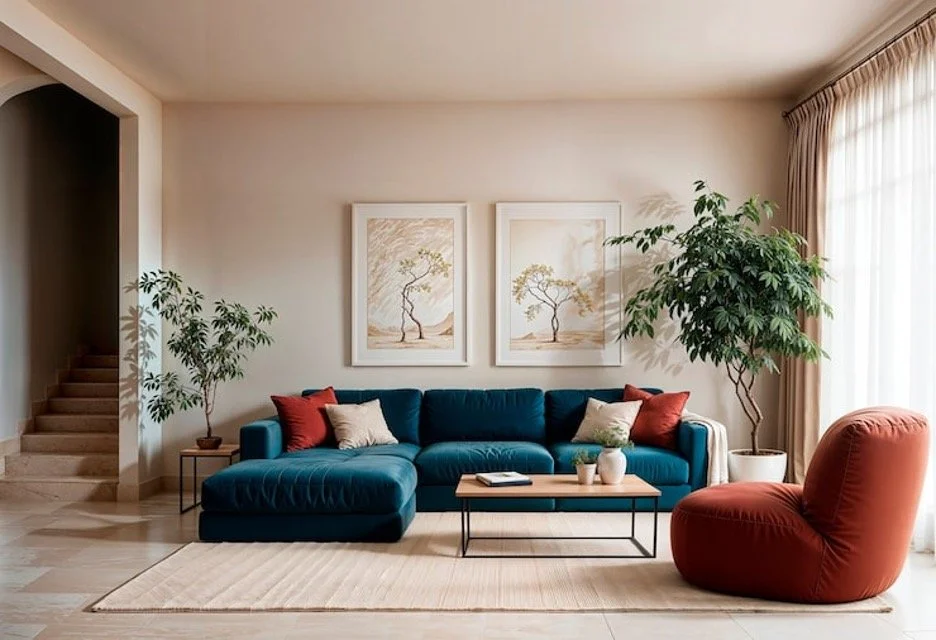
A timeless palette is a way to do things, not a rule. Roma Kirkland usually begins with soft neutrals and then adds depth with wood, linen, and stone. If a client loves colour, she keeps the base steady and brings bolder shades through art, cushions, or one accent chair.
This approach fits classic style interior design because it looks collected over time, not rushed. It also helps furniture timeless staples, like a neutral sofa or a wood dining table, work with many looks.
Use Scale and Texture to Make It Feel Finished
Many rooms feel “almost done” even after the big items arrive. The missing piece is often scale and texture. A tiny rug can make seating look scattered. Short curtains can make a room feel chopped.
Roma balances materials so the room has contrast without clutter: something soft, something structured, something matte, and a small touch of shine. These choices support a modern elegant look while still feeling easy to live with.
Add Personal Details That Aren’t Clutter
A timeless home should still feel personal. Roma encourages a few meaningful items with breathing room around them: a framed photo, a vintage mirror, a ceramic bowl, a favourite book stack. The goal is not to fill every surface. It is to tell the truth about the people who live there.
Styles can mix. A clean-lined sofa can sit beside an antique lamp. A modern table can pair with traditional art. The room stays modern elegant, but it does not feel like a showroom. Timeless interior design has warmth when it reflects real life.
Make Tidiness Part of The Design
A room only stays classic if it stays usable. Roma builds “easy reset” spots into the plan: a tray for remotes, a basket for throws, a closed cabinet for the everyday mess. She also thinks about maintenance, like washable covers and durable finishes that do not show every fingerprint.
When storage makes sense, timeless interior design feels lighter. People stop moving piles from chair to counter and start enjoying the space.
A Method That Keeps Decisions Simple
Roma Kirkland’s function-first method gives clients a steady path. Start with flow and layout. Choose timeless design pieces that handle real needs. Invest in furniture timeless staples that fit the room. Support the mood with lighting and a calm palette. Keep the foundation classic style interior design, then add a few personal details so it feels honest. The result is modern elegant, but still relaxed. That is why timeless interior design lasts. It is built around how people live, not around what is trending this month.